
What Should New Hampshire Home Buyers Know About Oil Tanks?
Lisa Brouillette, REALTOR® | The Valley Realty | August 20, 2026
If you are researching oil tanks before buying a house in New Hampshire, especially an older home, rural property, second home, or mountain-area home, an oil tank may be part of the inspection and due-diligence process. Many New Hampshire homes are heated by oil, so buyers should know where the tank is located, whether it is above ground or under ground, how old it appears to be, and whether there are records showing it has been inspected, maintained, replaced, or properly removed. An oil tank is not automatically a problem, but because leaks, buried tanks, missing documentation, and insurance questions can create expensive issues, it deserves attention before closing.
Key Takeaways
- Oil tanks are common in New Hampshire homes: This is especially true for older, rural, and mountain-area properties, so buyers should not be surprised if oil heat is part of the inspection conversation.
- Above ground and underground tanks are different concerns: Above ground tanks are easier to inspect visually, while under ground tanks may require more documentation or specialized evaluation.
- Records matter: Buyers should ask about the tank’s age, location, service history, inspection records, replacement records, and whether any older tank was removed or properly closed.
- New Hampshire updated disclosure language in 2026: As of August 2026, residential heating oil under ground storage tank information is part of the real estate disclosure conversation, making documentation even more important for buyers and sellers.
- An oil tank concern does not always end the deal: It may lead to more questions, further inspection, insurance review, negotiation, or clearer contract language before closing.
Why Oil Tanks Matter When Buying a Home in New Hampshire
When buyers think about inspection issues, they often think about roofs, foundations, septic systems, wells, or old electrical panels. Oil tanks belong in that same due-diligence category.
The concern is not simply whether the heat works. The bigger issue is whether the tank is old, leaking, poorly supported, undocumented, or located in a way that creates future risk. If heating oil leaks into soil, groundwater, a basement, or the surrounding property, cleanup can become expensive and complicated.
That does not mean buyers should panic when they see an oil tank. It means they should slow down, ask better questions, and make sure the right professionals are involved.
Above ground vs. Under ground Oil Tanks
One of the first things to understand is whether the property has an aboveground or underground oil tank.
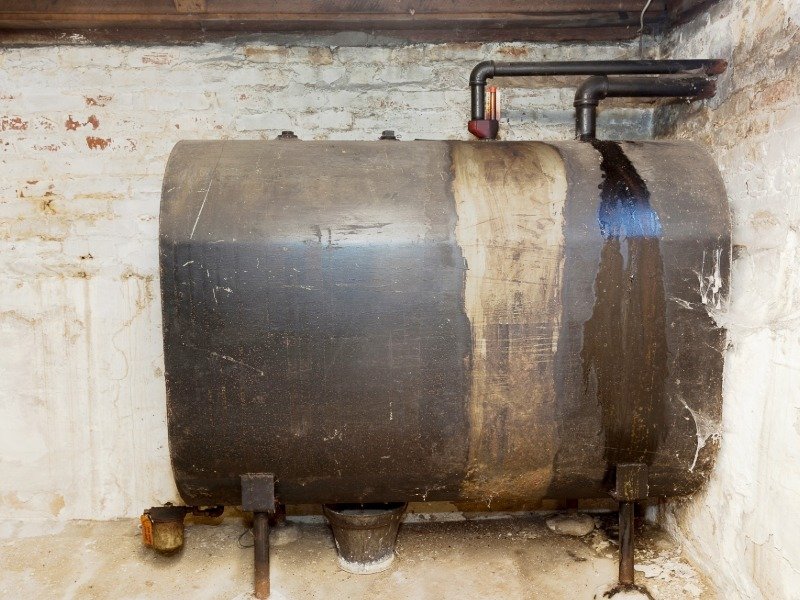
An above ground oil tank is usually located in a basement, garage, utility area, or outside near the home. Because it is visible, an inspector or qualified oil-tank professional can look at its condition more directly. They may be able to see rust, staining, dents, leaking fittings, poor supports, or other signs that the tank needs attention.
An under ground oil tank is a different situation. Because it is buried, its condition is harder to evaluate without specialized testing. Older buried tanks can corrode over time, and a leak may not be obvious from the surface.
If a seller says there used to be an under ground tank, ask for documentation. Was it removed? Was it properly closed? Was soil testing done? Are there records? A verbal explanation is helpful, but paperwork is what gives buyers more confidence.
What Buyers Should Look For
A general home inspection may identify visible concerns, but buyers should not assume every oil tank issue will be fully evaluated in a standard inspection. If the tank is older, buried, hard to access, visibly corroded, or missing records, it may be worth asking for a more specific evaluation.
| What You Notice | Why It Matters |
|---|---|
| Rust, corrosion, or staining | May point to age, moisture, or possible leakage. |
| Oil odor near the tank | Could indicate a leak, spill, or fitting issue. |
| Staining below the tank | Worth further inspection before closing. |
| Outdoor tank exposed to snow or ice | Weather exposure can affect condition over time. |
| Old fill or vent pipes | May suggest a buried tank once existed. |
| No clear records | Makes it harder to understand the tank’s history. |
One warning sign does not always mean there is a major problem. But it does mean the buyer should ask more questions before moving forward.
Questions to Ask Before or During Inspection
Buyers do not have to wait until the inspection period to start asking oil-tank questions. Some questions can be asked early through your buyer’s agent, especially if the home is older or the tank situation is unclear.
Good questions include:
✅ Is the home currently heated by oil?
✅ Where is the oil tank located?
✅ Is the tank aboveground or underground?
✅ How old is the tank?
✅ Has it ever been inspected, repaired, or replaced?
✅ Are there service records from the oil company?
✅ Has there ever been a buried tank on the property?
✅ If an old tank was removed, are there closure or testing records?
✅ Has there ever been a known leak or environmental issue?
The goal is not to make the process harder than it needs to be. The goal is to understand what you are buying.
A 2026 New Hampshire Update Buyers and Sellers Should Know
As of August 2026, New Hampshire has new language related to residential heating oil underground storage tanks. The update includes a requirement for real estate conveyance disclosures to include information about the presence of a residential heating oil underground storage tank.
For buyers, that is helpful, but it does not replace inspection, documentation, or follow-up questions. If a property is older, has an unclear tank history, or appears to have old fill or vent pipes, buyers should still ask for records and professional guidance.
This matters for sellers, too. If a property has, or may have had, a residential underground heating oil tank, sellers should gather whatever documentation they have before listing and talk with their agent, attorney, or a qualified oil-tank professional about current New Hampshire disclosure and removal requirements.
What Happens If a Concern Comes Up?
Finding an oil tank concern during inspection does not always mean the deal is over. It means you have new information that needs to be handled carefully.
| Situation | Possible Buyer Next Step |
|---|---|
| Older aboveground tank, no obvious leak | Ask for documentation, further evaluation, or discuss replacement cost. |
| Visible rust, staining, or odor | Request a qualified oil-tank or environmental inspection. |
| Suspected buried tank | Ask for records and consider specialized testing. |
| Prior tank removal with no paperwork | Request documentation or further verification. |
| Confirmed contamination or serious concern | Get professional guidance before moving forward. |
The important thing is not to leave the issue vague. If work needs to be done, the agreement should be specific about what will happen, who will do it, who will pay for it, what documentation will be provided, and when it must be completed.
This is where a local agent, a good home inspector, and the right oil-tank or environmental professional can make a real difference.
Insurance and State Resources
Oil tanks can also affect insurance. Before closing, buyers should speak directly with their insurance provider about the specific property, the heating system, and the tank. Ask whether the tank’s age, location, or condition creates any coverage concerns, and whether additional documentation or coverage is needed.
New Hampshire’s Department of Environmental Services has information on residential heating oil storage tanks and the NH DES Safetank program, which may help qualifying homeowners with certain tank upgrades, replacements, or maintenance needs. Buyers should confirm current details directly with NH DES, but it is worth knowing this resource exists if a tank may need attention after closing.
Why This Matters in the Mt. Washington Valley
Oil tanks are especially relevant in the Mt. Washington Valley because many homes here are older, rural, seasonal, or located outside more typical suburban infrastructure. Buyers may be looking at primary homes, ski homes, vacation properties, lake-area homes, or houses that have been used differently over time.
A buyer coming from a city or newer suburban market may not be used to thinking about oil heat, septic systems, private wells, private roads, plowing, or winter access. But in this region, those details are often part of understanding the full cost and responsibility of ownership.
If you are buying a home in Mt. Washington Valley, a beautiful listing photo is only one piece of the decision. The systems behind the house matter too.
A home can be beautiful, well-located, and still require careful due diligence. That is not a reason to avoid the property. It is a reason to understand it clearly.
Thinking About Buying a Home in New Hampshire?
If you are buying a home in the Mt. Washington Valley, the details matter. Oil tanks, septic systems, wells, private roads, heating costs, insurance, and winter access can all affect whether a property truly makes sense for you.
A home may look perfect online, but the right questions help you understand what ownership will actually feel like. If you are trying to sort through those details, I’d be happy to talk it through with you. We can meet in person, talk by phone, or set up a video chat, whatever feels easiest for you.
Frequently Asked Questions
-
Not necessarily. Many New Hampshire homes have oil heat. The important thing is to understand the tank’s age, location, condition, and records before closing.
-
Usually, yes. An above ground tank can be visually inspected more easily. An under ground tank may require specialized evaluation because leaks or corrosion may not be visible from the surface.
-
Yes. Depending on the concern, buyers may ask for further evaluation, seller repairs, replacement, removal, documentation, a price adjustment, or other contract terms. The right approach depends on the property and the severity of the issue.
-
Yes. Buyers should ask their insurance provider whether the tank creates any coverage concerns and whether additional documentation or coverage is needed before closing.
Thinking About Buying a Home in New Hampshire?
If you are buying a home in the Mt. Washington Valley, the details matter. Oil tanks are one of the details that can affect whether a property truly makes sense for you, especially when you factor in inspection results, insurance, heating costs, and future maintenance. A home may look perfect online, but the right questions help you understand what ownership will actually feel like. If you are trying to sort through those details before making an offer, I’d be happy to talk it through with you. We can meet in person, talk by phone, or set up a video chat, whatever feels easiest for you.
No pressure, just a practical conversation about the property, the process, and what you need to know before moving forward.
