
Buying a Home on a Private Road in the Mt. Washington Valley: What You Need to Know Before You Sign
Lisa Brouillette, REALTOR® | The Valley Realty | July 9, 2026

The Mt. Washington Valley is full of properties that sit at the end of winding, wooded lanes... and that's a big part of the appeal. Before you fall in love with the seclusion, the mountain views, and the idea of a road that only your neighbors use, there are some practical realities that every buyer needs to understand. A private road home in the Mt. Washington Valley comes with genuine advantages and genuine responsibilities, and knowing the difference before you sign can save you from a lot of expensive surprises.
Key Takeaways
- You Own the Upkeep: Buying a home on a private road in the Mt. Washington Valley means you... not the town... are responsible for plowing, grading, and repairs, which can cost thousands per year.
- The Agreement Is Everything: A recorded road maintenance agreement is often required by mortgage lenders and is the single most important document to review before making an offer.
- Privacy Has Real Value: Private road homes in the Valley frequently offer greater privacy, mountain views, and seclusion, making them especially popular as vacation rental or second-home properties.
- No Agreement, No Recourse: Without a formal road association or written agreement, neighbor disputes over maintenance costs are common and can affect your access, property value, and resale.
- Due Diligence Protects You: New Hampshire law gives private road homeowners limited legal recourse without a written agreement in place, so doing your homework before closing is essential.
What "Private Road" Actually Means in New Hampshire
A private road is one that is not owned or maintained by a municipality, county, or the state. In New Hampshire, once a road is not accepted by a town, responsibility for its upkeep falls to the property owners who use it. Under RSA 231:81-a, when several homes share the benefit of a private road and there's no written maintenance agreement, each owner must contribute equitably to the reasonable cost of upkeep... and any owner has the right to go to court to enforce that. That matters enormously in Carroll County property transactions because it defines who pays, who decides, and who has legal standing when something goes wrong.
In practice, this means the town of Conway, North Conway, Bartlett, Jackson, or wherever the property sits will not plow the road after a snowstorm, will not fill potholes after mud season, and will not repair washouts after a heavy rain. If the homeowners on that road don't organize and fund those things themselves, they simply don't happen.
There are two common structures you'll encounter when buying a home on a private road in the Valley. Some roads have a formal road association with recorded documents, dues, and a governance structure. Others have nothing... just a handshake understanding between neighbors, or no agreement at all. The difference between those two situations is enormous.
The Real Pros of Private Road Living in the Valley
It's the unique lifestyle and privacy that draws so many people to these tucked-away locations. Homes on private roads in the Valley offer some genuinely compelling advantages, and these aren't just abstract lifestyle perks.
Privacy and seclusion are the headline benefit. With no through traffic, a private road in the White Mountains feels dramatically quieter than a town-maintained route. Families with children or pets appreciate that the only vehicles on the road belong to neighbors. For buyers coming from suburban or urban environments, this level of quiet is often the whole point.
The scenery tends to be exceptional. Many of the most scenic parcels in the Valley... the ones with true mountain views, direct river frontage, or deep forest setting... are accessible only by private road. If you want a property that feels genuinely removed from the world, you are almost always going to be looking at a private road situation. This is especially true for second-home and vacation rental buyers who want a memorable, marketable setting.
The Valley market rewards this. The area draws buyers who want an experience, not just a house. Properties that offer genuine seclusion on a private road can command strong rental income and hold value well, particularly if the road is in good condition and well-maintained.
Lower traffic means lower risk. Emergency vehicles, delivery trucks, and mail carriers can still reach private road properties... this is a common misconception worth clearing up. The road being private has no effect on mail delivery, FedEx, UPS, or emergency services access, as long as the road is physically passable.

The Real Cons: What Catches Buyers Off Guard
The aesthetic appeal and market numbers show clear benefits, but what I'm seeing on the ground after 26 years in local real estate is that the practical challenges are equally real. The risks of buying a home on a private road are amplified here by specific regional factors.
Winter Road Maintenance in the White Mountains Is Not Optional
This is the single biggest issue for private road homes in the Valley, and it gets underestimated constantly. The Mt. Washington Valley receives significant annual snowfall, which means roads here need to be plowed after nearly every storm from November through April, sometimes beyond that. On a town-maintained road, this is handled for you. On a private road, you and your neighbors are organizing and paying for it.
Winter road maintenance in the White Mountains is a genuine operational challenge. For perspective, a seasonal contract for a single driveway in the Valley typically runs $200 to $600, but a shared private road is a much bigger job... often several times that, depending on length, surface, and how steep and hazardous it is. That total then gets split among however many homes share the road, which can work out to a very reasonable per-household number or a painful one.
Gravel roads also require spring grading after frost heave and mud season, which is another shared cost that catches first-time private road buyers by surprise.
Road Maintenance Agreements: The Document That Changes Everything
A private road maintenance agreement is a recorded legal document that spells out how costs are shared, how decisions are made, and what happens when a neighbor refuses to pay. Without this document, you have no enforceable mechanism to compel a neighbor to contribute... and in a seasonal resort area like the Valley, where some properties sit empty for months at a time, absentee owners who don't pay their share are a real and recurring problem.
Before making an offer on any property with private road access, ask your agent to pull the deed and confirm whether a road maintenance agreement exists and is recorded. A well-drafted agreement should cover:
| Topic | What to Look For |
|---|---|
| Maintenance responsibilities | Who is responsible for what tasks |
| Cost allocation formula | Equal split, mileage-based, or other method |
| Decision-making process | How repairs are approved and contracted |
| Non-payment remedies | What happens if a neighbor doesn't pay |
| Snow removal specifics | Who arranges plowing and how often |
| Road standards | Minimum condition requirements |
| Amendment process | How the agreement can be changed |
If no agreement exists, that is not automatically a dealbreaker... but it is a critical negotiating point and a legal project you should plan to address before or immediately after closing.
Financing a Private Road Home: What Lenders Require
The logistical challenges often extend to financing, which is more complicated than most buyers expect. FHA and VA loans both have specific requirements around private road access.
Conventional loans through Fannie Mae and Freddie Mac also have guidelines around private road access that your lender will need to verify during underwriting. In general, lenders want to see either a recorded maintenance agreement or evidence that the road provides year-round access and is in acceptable condition.
The practical implication: if you're buying on a private road with no recorded agreement, be prepared for your lender to require that one be put in place before closing. This can delay closing and requires cooperation from all neighboring property owners, which is not always easy to obtain.
Road Associations: When You Have One and When You Don't
A formal road association is a more structured governance entity... often with bylaws, annual dues, and elected officers. These exist on some of the larger private road developments in the Valley, particularly older camp communities and some ski-adjacent neighborhoods. When one exists and is functioning well, it takes a lot of the uncertainty out of the equation.
When one doesn't exist, you're relying on informal goodwill between neighbors. That can work fine for years... and then change the moment a property sells and a new owner has different priorities, a different financial situation, or simply a different attitude about shared responsibilities.
The "Road Drama" Problem Is Real
Neighbor disputes over road maintenance are one of the most commonly cited frustrations among private road homeowners nationwide, and the Valley is not immune. Disagreements over who should pay more, whose contractor to use, whether a repair is necessary, and who gets to make that call are genuinely common. In a community with a mix of year-round residents and seasonal or vacation rental owners, aligning everyone's interests and availability is an ongoing challenge.
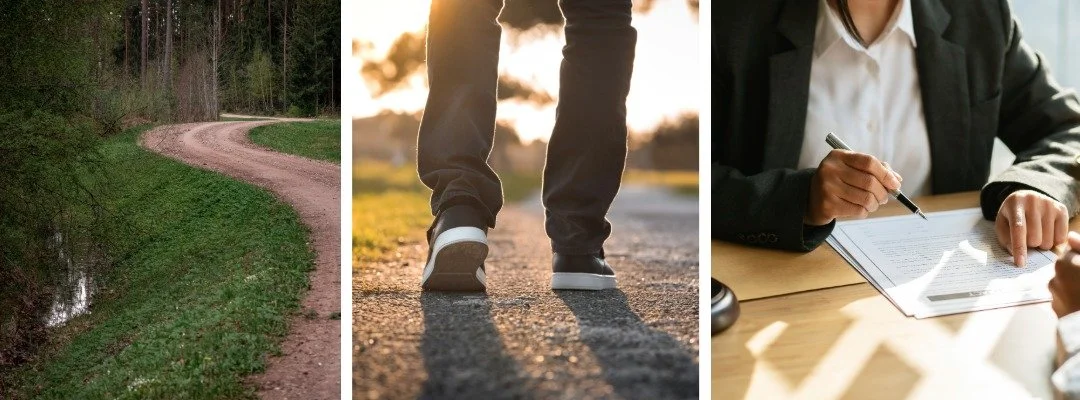
Due Diligence Checklist for Private Road Buyers in the Valley
Before closing on any property with private road access, work through this list with your real estate agent and attorney:
✅ Request all road-related documents recorded with the county, including any easements, maintenance agreements, or road association bylaws
✅ Ask who currently maintains the road and get contact information for the road association or leading neighbor
✅ Get a copy of current maintenance costs including plowing contracts, grading, and any recent repair bills
✅ Inspect the road physically in the season most likely to reveal problems (mud season or after a heavy rain)
✅ Confirm the road's condition and length and get a contractor's opinion on what maintenance will cost going forward
✅ Ask your lender early about their specific requirements for private road properties so you can address any gaps before you're under contract
✅ Consult a New Hampshire real estate attorney about the enforceability of any existing agreement and whether a new or revised one is advisable. New Hampshire is an attorney-closing state, so a real estate attorney will already be involved in your transaction... bringing them in early to review the road agreement is a natural step. A title company can search title and issue title insurance, but judging whether a maintenance agreement is legally enforceable, or drafting a new one, is legal work an agent or title company can't do for you.
How This Affects the Vacation Rental and Second-Home Market
The Valley has a significant vacation rental and second-home component, and private roads intersect with this in important ways. A property on a beautifully maintained private road can be a genuinely premium rental experience... guests appreciate the privacy and the feeling of arrival. But a property on a poorly maintained road creates operational headaches for rental managers, can damage guest vehicles, and can deter bookings in shoulder seasons when road conditions are worst.
If you're buying as an investment or vacation rental property, factor road maintenance costs into your operating budget from day one. An annual road maintenance contribution is a real line item, and a road that falls into disrepair can directly affect your rental income and property value. I maintain a vetted list of local property management resources and service providers to help my clients navigate these ongoing ownership logistics.
So... Is a Private Road Home Right for You?
Buying a home on a private road in the Valley is absolutely the right choice for many buyers, and it's the wrong choice for others. The properties are often genuinely exceptional. The privacy, the setting, and the feeling of having arrived somewhere real rather than somewhere generic are hard to replicate on a town-maintained road.
But you need to go in with clear eyes. The road agreement is not a detail... it's a core part of what you're buying. The same is true for other property systems and responsibilities buyers may not see clearly in listing photos, including septic systems, private wells, heating systems, and oil tanks. A well-structured road association with a solid maintenance agreement and financially engaged neighbors is a genuine asset. A private road with no agreement, absentee owners, and deferred maintenance is a liability that can follow you for as long as you own the property.
This is exactly the kind of thing I help buyers sort through. I know which private road communities in the Valley are well-run and which ones have a history of conflict... and I'll tell you the truth about what you're looking at before you make an offer, not after. Bringing in that local knowledge early is far less expensive than trying to untangle a road dispute once you've closed. Whether you're buying or selling, my goal is to give you the data and advocacy you need for a stress-free transition.
Frequently Asked Questions
-
Yes, in almost all cases. Emergency vehicles, mail carriers, and delivery services can access private road properties as long as the road is physically passable. The "private" designation is a legal ownership distinction, not a barrier to access. The practical concern is keeping the road in condition that allows year-round travel, which is why winter maintenance matters so much in the White Mountains.
-
Generally yes, but your lender could scrutinize the road access situation during underwriting. Most conventional loan programs want to see that the property has year-round access and that a maintenance agreement is in place or that access is otherwise legally protected. Talk to your lender before making an offer so you know exactly what they'll need.
-
In New Hampshire you're not entirely without recourse, even with no written agreement... under RSA 231:81-a, when several homes share a private road, each owner can bring a civil action to make the others contribute equitably to reasonable maintenance costs. But enforcing that means going to court, which is slow and expensive. A well-drafted recorded agreement is far better protection: it can spell out each owner's share up front and, in many cases, grant the power to place a lien on a non-paying owner's property for unpaid assessments. That's exactly why getting the agreement right before you buy matters so much.
-
Your real estate agent can request a title search that will surface any recorded easements, road agreements, or road association documents. You can also search Carroll County property records via the Registry of Deeds directly. Make this a standard part of your due diligence on any private road property, not an afterthought.
-
The "private" label itself usually doesn't change your premium or eligibility. What insurers actually price on is risk... and for a private road, the big factor is emergency access. Insurers look at how far you are from a fire station and how reliably fire trucks can reach your home, so a road that stays passable year-round matters for insurability, not just convenience. A poorly maintained or seasonally impassable road is where problems can show up. It's smart to disclose the private road access when getting quotes and ask your agent how your specific location and fire protection rating affect your policy.
Ready to Talk About Buying in the Valley?
The best time to start the conversation is before you are ready to make an offer. Whether you are hoping to buy now, later this year, or you are just exploring your options, I am happy to sit down with you, in person, by phone, or video chat, and talk through which towns fit what you are looking for, what to watch for in the property types you are considering, and what timing makes the most sense given current inventory.
No pressure, no obligation. Just an honest conversation about your search and your goals.
Let's connect.
