
The Best Towns in Mount Washington Valley, NH for Remote Work (And How to Choose the Location for You)

Lisa Brouillette, REALTOR® | The Valley Realty | April 30, 2026
Are you considering Mount Washington Valley remote work as your next chapter? The good news is that you have real options... and the better news is that each town in this valley has a genuinely different feel. The harder news is that "just move to North Conway" is too simple an answer for most people. The right town depends on how you work, what you need on a Tuesday afternoon, and how much elbow room you want between you and the tourist crowd.
Key Takeaways
- North Conway is the strongest hub for Mount Washington Valley remote work, offering the most concentrated amenities, coworking options, and reliable infrastructure in the valley.
- Towns like Jackson and Bartlett offer quieter surroundings and lower density, but remote workers should verify internet speeds at a specific address before committing.
- The valley spans roughly 20 towns, each with distinct tradeoffs in cost of living, commute distance, and seasonal congestion that matter for day-to-day remote work life.
- Conway's Mt. Washington Valley Economic Counsil is one of the few dedicated tech-focused workspace facilities in northern New Hampshire, making it a practical backup option for any valley resident.
- Living in Mount Washington Valley means you can close the laptop and be on a trail, ski slope, or river within minutes... the work-life balance here is real, not just a marketing line.
Why Mount Washington Valley Works for Remote Workers
Mount Washington Valley remote work has moved from a pandemic-era experiment to a genuine lifestyle choice for a growing number of professionals. The valley sits in the heart of the White Mountains, encompassing roughly 20 towns along and around Route 16, and it offers something most remote work destinations can't match: serious outdoor infrastructure paired with a real, year-round community.
This isn't a resort enclave where you feel like a visitor. People raise families here, run businesses here, and have built a local economy that supports daily life... not just weekend tourism. That distinction matters enormously when you're trying to work productively in a place, not just vacation in it.
The key question isn't whether the valley can support remote work. It can. The question is which town fits the way you actually work and live. Many people I work with find that having a local guide makes all the difference when buying a home in Mt. Washington Valley… I’m here to help you find the spot that fits your professional needs and your lifestyle.
A great way to learn about buying in the area is The Best Towns to Live in Mt. Washington Valley: A Real Resident's Guide
Understanding the Valley's Geography Before You Choose
The towns in Mount Washington Valley aren't interchangeable. They're strung along a roughly north-south corridor, and your position on that corridor has real daily-life consequences. North Conway and Conway anchor the southern end of the valley and offer the most services, stores, restaurants, and infrastructure. As you move north through Glen, Bartlett, and into Jackson, the towns get smaller, quieter, and more scenic... but also more dependent on North Conway for practical errands.
Here's a quick orientation to use as you read through this guide:
| Town | Character | Distance to North Conway |
|---|---|---|
| North Conway | Central hub, most amenities | — |
| Conway | Residential, slightly less busy | ~5 miles south |
| Glen | Small, scenic, quiet | ~10 miles north |
| Bartlett | Local feel, trail access | ~15 miles north |
| Jackson | Picturesque, higher-end | ~15 miles north |
Understanding this layout helps you make a smarter decision than "I want to be near the mountains"... because in this valley, you always are. And may I include that this is not a complete list of all the towns in this beautiful valley. To really drill down to what is the right fit for you, having a conversation with a local real estate professional is going to give you more clarity. The Valley Realty is here to assist you.
North Conway: The Practical Hub for Most Remote Workers
North Conway is a village within the town of Conway and it's the default answer for Mount Washington Valley remote work for good reason. It has the highest concentration of reliable internet infrastructure, the most dining and coffee shop options for off-site working, and the clearest path to professional resources when you need them.
The Mt. Washington Valley Economic Council, located just off Route 16 in neighboring Conway, was specifically created to support technology-intensive businesses and offers high-speed internet, office suites, and meeting rooms. That kind of dedicated infrastructure is rare in rural New England, and it's a meaningful asset for anyone whose work occasionally requires more than a home office.
The tradeoff in North Conway is density. During peak tourist seasons... foliage in October, ski weekends from December through March, and summer hiking season... the main corridor gets congested and the town's character shifts. If you're working from home most of the time, this matters less. If you depend on quick errands and short commutes, build seasonal variation into your expectations before you commit.
North Conway is the right fit if: You want maximum infrastructure reliability, easy access to services, and a varied food and coffee scene for working outside the house.
Conway: The Quieter Neighbor with Real Infrastructure
Conway borders North Conway to the south and gets significantly less tourist foot traffic while sharing much of the same practical infrastructure. It's worth treating Conway as its own option rather than just "near North Conway" because the day-to-day living experience feels meaningfully different.
The Chuck Roast Venture Center, based in this area, offers flexible co-working space and private offices ranging from shared desks up to furnished private offices, giving Conway-area residents a professional workspace option without the commute pressure of a major city. Coworking in the White Mountains is still an emerging category, which means options are more limited than in Manchester or Portsmouth, but what exists in the Conway area is legitimate and purpose-built.
For remote workers who want NH's work-from-home infrastructure without the tourist-season crowds of central North Conway, the Conway area is underrated and worth a serious look.
Conway is the right fit if: You want access to North Conway's resources on demand but prefer a lower-key residential environment as your base.
Jackson: Quality of Life at a Premium
The Jackson, NH community has a reputation for being one of the most beautiful villages in New England, and that reputation is deserved. The covered bridge, the inn district, the ski trails that start from the village center... it all adds up to a genuinely special place to live.
For remote workers, Jackson offers a high quality of life and, in most areas, reliable internet connectivity. The Jackson Public Library provides a fallback option for free Wi-Fi in a setting that's more charming than most co-working spaces anywhere. The realistic caveat is cost. Housing in Jackson tends to run higher than Bartlett or Conway, and the town is small enough that services require a drive south to North Conway for most practical needs.
Jackson is also quieter in a way that some remote workers thrive in and others find isolating over time. If you're introverted, deadline-driven, and don't need a lot of spontaneous social options, Jackson can be genuinely ideal. If you want to be able to walk to a coffee shop on a whim, it may feel limiting by month three.
Jackson is the right fit if: You prioritize environment and quality of life above convenience, are willing to pay a premium for it, and work best in a peaceful, distraction-free setting.
Bartlett and Glen: The Underrated Middle Ground
Bartlett and Glen sit between North Conway and Jackson geographically and, in many ways, experientially. They offer a lower cost of living than Jackson while remaining within a 15-to-20-minute drive of North Conway's full range of amenities. For remote workers who need reliable access to town but don't want to pay North Conway or Jackson prices, this corridor is the valley's best-kept practical secret.
Glen is tiny... genuinely small... but its location at the junction of Routes 16 and 302 makes it a surprisingly well-connected base. Bartlett has more of a residential community feel and immediate trail access that's hard to beat for anyone who treats their midday hike as a non-negotiable part of the workday.
Internet reliability in Bartlett and Glen requires address-level verification before you commit to renting or buying. The valley's connectivity has improved significantly, but rural pockets still exist where speeds don't support video-heavy workflows. Always test before you sign a lease.
Bartlett and Glen are the right fit if: You want more privacy and immediate nature access than North Conway provides, are price-conscious, and don't mind a short drive for daily services.
What to Actually Check Before Choosing a Town
Choosing between these towns based on vibe alone is how people end up frustrated six months in. Here's the practical checklist worth working through before you decide:
Confirm internet at the specific address, not the general area. The valley's connectivity has improved considerably, but service varies by street, not just by town. Ask the landlord for speed test results or run your own before signing anything.
Think through your "worst case Tuesday" scenario. If your internet goes down, where's your backup? Is there a library, a coworking space, or a coffee shop with reliable Wi-Fi within a reasonable distance? In North Conway, this is easy. In Bartlett or Glen, it requires more planning.
Factor in seasonal reality. Living in Mount Washington Valley means living with tourism cycles. Summer and foliage season bring traffic and crowds to the North Conway corridor. Winter brings ski traffic on weekends. If you're a weekday-only remote worker this affects you less, but it's real.
Test the commute to services you actually need. Grocery runs, medical appointments, hardware stores... map the actual drive from any address you're considering. A 12-minute drive in January can become a 25-minute drive in July.
Spend a week there before committing. Rent a short-term place in the town you're considering... not a resort or a vacation rental, but something that approximates real life. Work from it, grocery shop from it, and see how the rhythm of the place fits yours.
Buying a Home in Mt. Washington Valley, NH: What Every Buyer Needs to Know in 2026 is a must read to get acquainted with the area.


The Work-Life Balance Reality
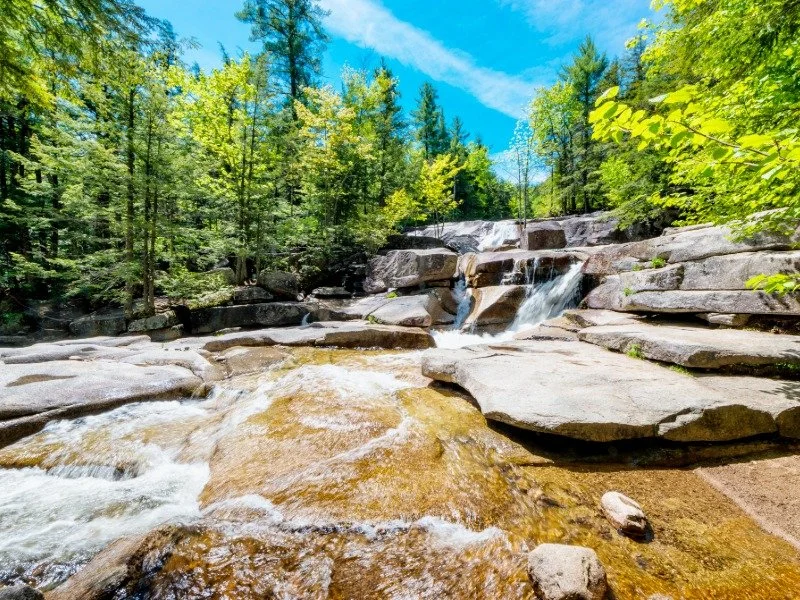
Here's the part the tourism websites actually get right: the outdoor access in this valley is genuinely transformative for people whose work allows flexibility. You can finish a morning of video calls, lace up your boots, and be on a White Mountain trail within 15 minutes. You can ski at lunch. You can kayak after your last meeting. That's not marketing language... that's the actual daily experience of remote workers who've made this valley their home.
What makes it work isn't just proximity to trails. It's that the valley's culture treats outdoor life as a baseline expectation, not a weekend bonus. Your neighbors are doing it. Local cafes close early because people are out. There's a social ecosystem built around people who work hard and play in the mountains, and that community feeling is part of what keeps remote workers here long-term.
Whether you land in North Conway, Jackson, Bartlett, or anywhere else in the valley, you're choosing a place where the outdoors is genuinely integrated into the rhythm of daily life. For the right kind of remote worker, that changes everything. If you're curious about property values in these areas, that’s what we are here for. Le't’s chat or email for more info.
Frequently Asked Questions
-
North Conway is your safest bet. It has the most developed infrastructure in the valley, the most options for backup workspaces like the Conway Tech Village and local cafes, and the most consistently reliable connectivity in the region.
-
Jackson tends to be one of the pricier options in the valley due to its reputation and limited housing inventory. Bartlett and Conway generally offer lower costs of living while keeping you within easy reach of the valley's full range of amenities. Always check current rental and purchase prices directly with local real estate agents since the market shifts seasonally.
-
Yes. The Conway area has two notable options: the Technology Village Business Resource Center and the Chuck Roast Venture Center, both of which offer flexible desk and office options. Dedicated coworking in the White Mountains is limited compared to larger cities, so many remote workers supplement with coffee shop work sessions.
-
Connectivity has improved significantly across the valley, but it still varies by specific address in more rural areas. Before committing to any lease or purchase in either Town, run a speed test at the actual address and ask neighbors about their provider experience. Don't rely on town-level generalizations.
-
No, not practically. The valley is rural and spread out, and while North Conway's main corridor is walkable for some daily needs, a vehicle is essentially required for the full range of errands, healthcare access, and getting around the region. This is an important consideration if you're relocating from a walkable urban environment.
Ready to Find Your Place in the Valley?
The best time to start the conversation is while you're still exploring. Whether you're narrowing down your list of towns, planning a visit to the area, or just trying to figure out what life here actually looks like day to day... I'm happy to sit down with you (in person, by phone, or video chat) and talk through what each community is really like, what the market looks like right now, and what makes sense for your situation.
No pressure, no obligation. Just an honest conversation about what you're looking for and where to find it.
Let's Talk
